
The number that keeps textile procurement managers awake at night is not the price of cotton. It is not electricity. It is not labour.
It is the chemical cost per kilogram of finished fabric — and for most Pakistani mills, it is 15 to 30 percent higher than it needs to be.
Not because chemical prices are unavoidably high. Not because the chemistry is inherently expensive. But because of a set of entirely preventable procurement and process mistakes that are silently inflating chemical costs in factories across Faisalabad, Lahore, Karachi, and Sialkot every single month.
This is the article that fixes that.
We are The Chemical House — a registered industrial chemical importer and distributor based in Lahore, with years of direct experience supplying Pakistan’s textile, leather, pharmaceutical, and manufacturing sectors. We have seen — from the inside — exactly where chemical cost gets wasted. And in this article, we are going to show you precisely how to stop wasting it.
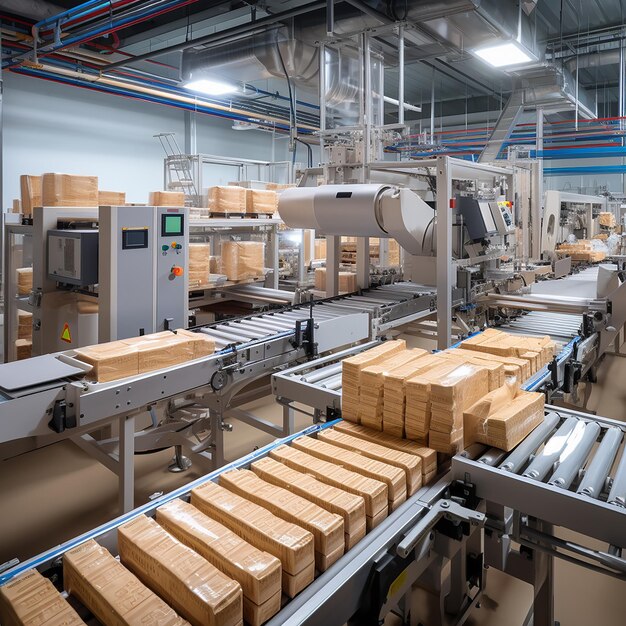
The Hidden Chemical Cost Crisis in Pakistan's Textile Sector
Pakistan’s textile industry contributes over 60% of the country’s total exports and employs nearly 40% of its industrial workforce. It is the backbone of the national economy — and it runs entirely on industrial chemicals.
Sodium Sulphate Anhydrous for reactive dyeing. Acetic Acid for fabric finishing and pH neutralisation. Sulphuric Acid for dye bath pH control. Magnesium Sulphate as a dyeing electrolyte. Calcium Carbonate for wastewater neutralisation. Aluminium Sulphate for effluent treatment. Formic Acid for acid dyeing of synthetic fibres. Citric Acid for descaling and pH adjustment. Borax Decahydrate for fire-retardant finishing and buffering applications.
Every single one of these chemicals represents a cost line on your production budget. And in the current economic environment — with import costs elevated, the rupee under pressure, and energy prices high — the difference between a mill that manages its chemical costs intelligently and one that does not is frequently the difference between a profitable operation and a loss-making one.
The tragedy is that most of the cost excess is entirely preventable. Here is exactly where it comes from — and how to eliminate it.
Strategy 1: Stop Buying Chemicals on Price. Start Buying on Cost Per Effective Unit.
This is the single most transformative shift in thinking that any textile procurement team can make — and almost none of them have made it.
The price per kilogram of a chemical is not your cost. Your cost is the price per unit of effective function delivered — which only makes sense when you factor in purity.
Consider Sodium Sulphate Anhydrous for reactive dyeing. Your validated process recipe requires 60 g/L of Na₂SO₄ in the dye bath. If you purchase certified 99.5% purity Na₂SO₄ at Rs 85/kg, you are dosing with very close to the intended ionic strength. If you purchase uncertified 91% purity Na₂SO₄ at Rs 76/kg — apparently cheaper — your effective Na₂SO₄ per kilogram is 8.5% lower than your recipe expects. Your dye exhaustion drops. You use more expensive reactive dye to compensate. Your shade reproducibility deteriorates. You generate repeat dyeing costs.
The apparent saving of Rs 9/kg on the chemical costs you Rs 40–80/kg on reactive dye compensation and repeat processing — every single batch. This is not a theoretical example. It happens in Pakistani mills every week.
The rule: Always calculate cost per unit of active component, never cost per kilogram of product. Demand a batch-specific Certificate of Analysis with every delivery. Walk away from any supplier who cannot or will not provide one.
Strategy 2: Optimise Your Sodium Sulphate Anhydrous Dosing — The Biggest Single Saving in Reactive Dyeing
For most reactive dyeing operations, Sodium Sulphate Anhydrous represents the highest-volume chemical consumable in the dye house — and it is systematically over-dosed in a large proportion of Pakistani mills.
The standard dosing ranges for Na₂SO₄ in reactive dyeing are well-established: 20–30 g/L for pale shades, 40–60 g/L for medium depths, and 60–80 g/L for deep shades. Yet many mills use flat-rate dosing across all shade depths — applying dark-shade quantities to light and medium shades — because the recipe was never formally validated, or because the production team’s instinct is that more electrolyte means safer results.
More electrolyte does not mean safer results. Beyond the optimum for a given shade depth, excess Sodium Sulphate can cause dye aggregation, uneven migration, and — particularly at pale shades — over-exhaustion that produces unlevel dyeing. You are paying for a chemical that is not just unnecessary but is actively degrading your quality.
The action: Commission a dye house audit. Map your Na₂SO₄ dosing rates against actual shade depth requirements. Validate reduced dosing for light and medium shades in lab-scale trials. For every gram per litre you legitimately reduce from your dye bath, the saving across an annual production volume of tens of thousands of kilograms is substantial.
Strategy 3: Use Magnesium Sulphate to Reduce Reactive Dye Consumption
This strategy is known by Pakistan’s most technically advanced dye houses — and completely unknown to the majority.
Magnesium Sulphate (MgSO₄), used in combination with or as a partial replacement for Sodium Sulphate Anhydrous, provides a fundamentally different ionic environment in the reactive dye bath. The divalent Mg²⁺ ion is significantly more effective at promoting dye exhaustion than the monovalent Na⁺ ion at equivalent ionic strength — meaning that a smaller total electrolyte dosing can achieve equivalent or superior dye exhaustion when MgSO₄ is incorporated into the electrolyte blend.
The practical result for a mill that validates this approach: the same shade depth can be achieved with lower total dye concentration in the bath, because the MgSO₄-enhanced ionic environment drives higher dye-to-fibre uptake efficiency. Since reactive dyes cost 10 to 50 times more per kilogram than MgSO₄, the economics are compelling.
This is not a universal recommendation — it requires lab trials with your specific dye classes and shade targets before production implementation. But for mills producing significant volumes of medium and dark reactive shades, the potential dye cost saving is substantial and achievable.
Strategy 4: Fix Your Acetic Acid Application — The pH Control Problem Nobody Talks About
In the average Pakistani textile finishing operation, Acetic Acid application after alkaline processing is imprecise in ways that cost money in two directions simultaneously.
Under-dosing leaves residual alkalinity in the fabric. That residual alkali continues to hydrolyse reactive dyes on the finished cloth — causing colour fading during storage and in the hands of the end customer. This generates claims, returns, and reputational damage that dwarfs the cost of proper acid application.
Over-dosing adds unnecessary acid cost and can affect handle, dimensional stability, and certain finishing chemical performance by creating an overly acidic fabric pH. It also generates a more acidic effluent stream, increasing your Calcium Carbonate or neutralisation chemical consumption in your ETP.
The solution is straightforward: install fabric pH measurement at the washing range exit after acid application, and calibrate your Acetic Acid dosing to consistently achieve pH 5.5–6.5 at that measurement point. This single change typically allows a 15–25% reduction in Acetic Acid consumption while simultaneously improving colour fastness and eliminating customer claims. The capital cost is a pH meter. The return is immediate.
Strategy 5: Integrate Your Sulphuric Acid and Aluminium Sulphate ETP Costs Into Your Production Cost Model
Most textile mills in Pakistan treat their Effluent Treatment Plant (ETP) as an unavoidable compliance cost — a separate budget line that is minimised by reducing chemical usage rather than optimised by improving treatment efficiency.
This thinking is costing them money in two ways.
First, the volume of chemicals your ETP consumes is directly driven by the quality and concentration of chemicals you add in your production processes upstream. Dye bath chemicals that are correctly dosed produce an effluent of predictable characteristics that can be treated efficiently with well-calibrated quantities of Sulphuric Acid for pH correction, Aluminium Sulphate for coagulation, and Calcium Carbonate for neutralisation. Haphazardly dosed production chemicals produce variable effluent that requires reactive, wasteful ETP dosing to achieve compliance.
Second, an ETP that operates at consistent, validated dosing — rather than reactive adjustment — generates treated water of more consistent quality. Consistent water can potentially be recycled for non-critical production steps, reducing fresh water consumption and the associated costs of water treatment.
The integration: The same chemical quality discipline that drives your production cost efficiency also drives your ETP efficiency. One certified supplier, one quality standard, one COA across your entire chemical portfolio — The Chemical House supplies the complete range from Sulphuric Acid to Aluminium Sulphate to Calcium Carbonate to Sodium Sulphate Anhydrous and Acetic Acid — with the documentation consistency that makes process optimisation actually work.
Strategy 6: Stop Repeat Dyeing — It Is the Most Expensive Chemical Waste of All
In a Pakistani textile mill processing 10,000 metres of fabric per day, a repeat dyeing rate of just 5% represents 500 metres of fabric per day that consumes chemicals twice — reactive dye, electrolyte, acid, softener, fixing agent — plus water, steam, and labour for the second processing cycle.
On an annualised basis at 300 production days, that is 150,000 metres of fabric consuming double chemicals. The reactive dye cost alone for that volume can exceed Rs 3–5 million per year — for a mill that has already convinced itself it is running efficiently because individual batch costs look acceptable.
The leading chemical causes of repeat dyeing in Pakistani reactive dyeing operations are, in order of frequency: electrolyte concentration variance (inconsistent Sodium Sulphate Anhydrous purity), dye bath pH drift (poorly calibrated Sulphuric Acid addition), fixation alkali inconsistency, and water hardness variation affecting dye bath chemistry.
Every one of these is a chemical supply quality or process control problem — and every one is solvable with the right supplier relationships and basic process discipline.
Strategy 7: Consolidate Your Chemical Supply to One Certified Supplier
The most underestimated source of chemical cost waste in Pakistani textile mills is supplier fragmentation — buying each chemical from a different trader based on who offered the lowest price that week.
When your Sodium Sulphate Anhydrous comes from Supplier A, your Acetic Acid from Supplier B, your Magnesium Sulphate from Supplier C, and your Formic Acid from Supplier D — you have four different quality standards, four different COA formats, four different batch consistency profiles, four sets of delivery schedules to coordinate, and four separate opportunities for supply failure on any given week.
Every time a supplier’s batch comes in with a purity that differs from its stated specification — even by 2–3% — your validated processes no longer behave as expected. The root cause is invisible until you trace it back to the chemical. The production impact is immediate.
Consolidating your textile chemical supply to one certified importer with verified purity standards, consistent stock, and a complete product portfolio eliminates this fragmentation — and with it, a significant source of quality variance, process adjustment cost, and management overhead. Check what we have in stock right now at The Chemical House Ex Stock page and explore our complete product range.
The Bottom Line: Chemical Cost Is a Quality Problem in Disguise
Every strategy in this article leads to the same fundamental truth: the textile mills that achieve the lowest actual chemical cost per kilogram of finished fabric are not the mills that buy the cheapest chemicals. They are the mills that buy the most consistently specified chemicals and use them with the most disciplined process control.
Certified purity does not cost more than uncertified purity — when you account for the dye compensation, repeat processing, and quality claims that inconsistent purity generates. Reliable supply does not cost more than fragmented supply — when you account for the emergency procurement premiums and production disruptions that supply gaps create.
The Chemical House is a registered industrial chemical importer and distributor based at 23-M Sheikh Plaza, Model Town, Lahore. We supply the complete range of textile processing chemicals — Sodium Sulphate Anhydrous, Acetic Acid, Sulphuric Acid, Magnesium Sulphate, Formic Acid, Aluminium Sulphate, Calcium Carbonate, Borax Decahydrate, Citric Acid Monohydrate, Sulphur, and Rock Salt — with batch-specific COA documentation, GHS-compliant SDS for every hazardous material, and the supply consistency that makes chemical cost optimisation actually achievable.
📞 +92 300 8408471 | ✉️ Info@thechemicalhouse.com | 📍 23-M Sheikh Plaza, Model Town, Lahore
→ Check Ex Stock Availability | Request a Bulk Quote | Browse All Products
Frequently Asked Questions
How can I reduce chemical costs in textile dyeing in Pakistan?
The five highest-impact actions are: switching from price-based to purity-based procurement (demanding batch COAs); optimising Sodium Sulphate Anhydrous dosing by shade depth rather than flat-rate dosing; incorporating Magnesium Sulphate into your electrolyte programme to improve dye exhaustion efficiency; calibrating Acetic Acid application with fabric pH measurement; and consolidating chemical supply to one certified importer to eliminate purity variance. The Chemical House supplies all of these chemicals with full COA documentation from Lahore — contact us to discuss your specific chemical programme.
What is the most expensive chemical waste in textile processing?
Repeat dyeing is the most expensive form of chemical waste in textile processing — consuming reactive dye, electrolyte, acid, softener, and fixing agent twice, plus double water, steam, and labour. The leading chemical causes are electrolyte concentration variance (Sodium Sulphate Anhydrous purity inconsistency), dye bath pH drift (imprecise Sulphuric Acid dosing), and water hardness variation. A 5% repeat rate at a mill producing 10,000 metres per day can cost Rs 3–5 million per year in excess chemical consumption alone — before labour and energy are included.
Why does Sodium Sulphate Anhydrous purity affect dyeing quality?
Sodium Sulphate Anhydrous is used as an electrolyte in reactive dyeing to promote dye exhaustion. When purity drops from the specified 99.5% to 91–93% (common with uncertified supply), the actual Na₂SO₄ concentration in the dye bath is 6–8% lower than your validated recipe requires. Dye exhaustion drops proportionally. The shade comes out lighter than standard. You either accept an off-standard result or run a repeat dye cycle. Both outcomes cost more than the price difference between certified and uncertified Na₂SO₄. Always demand a batch-specific COA confirming moisture content and Na₂SO₄ purity.
Can Magnesium Sulphate replace Sodium Sulphate in textile dyeing?
Magnesium Sulphate cannot directly replace Sodium Sulphate Anhydrous on a kilogram-for-kilogram basis without formulation adjustment — the two salts provide different ionic environments and behave differently in the dye bath. However, MgSO₄ used in combination with Na₂SO₄ can improve dye exhaustion efficiency and allow reduction of total electrolyte dosing. This requires lab validation with your specific dye classes and shade targets. The Chemical House supplies both chemicals with full technical documentation — contact our team for application-specific guidance.
Where can I buy all my textile chemicals from one supplier in Pakistan?
The Chemical House in Lahore supplies the complete range of textile processing chemicals — Sodium Sulphate Anhydrous, Acetic Acid, Sulphuric Acid, Magnesium Sulphate, Formic Acid, Aluminium Sulphate, Calcium Carbonate, Borax Decahydrate, and Citric Acid Monohydrate — all with batch-specific COA documentation, consistent purity, and reliable bulk supply from our Lahore facility. Call +92 300 8408471 or contact us online for current pricing and availability.